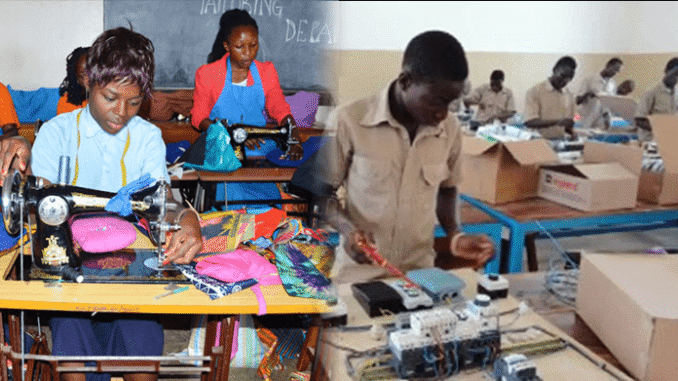
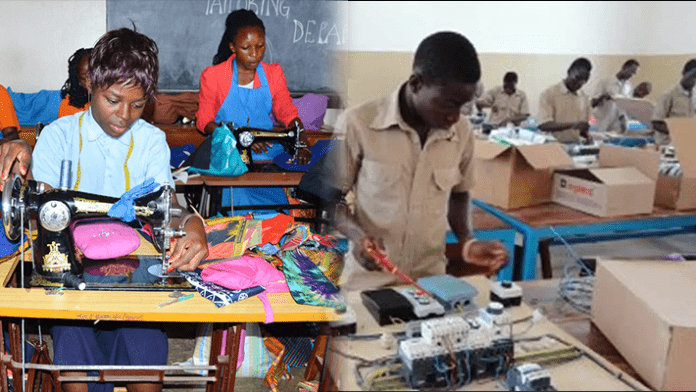
The UNESCO Head of Office in Abuja, Jean-Paul Abiaga, has called on stakeholders in Nigeria’s education sector to prioritise youth skills development to address unemployment gaps in the agricultural sector.
The National Programme Officer on Culture at UNESCO, Dr Ifeanyi Ajaegbo, who represented Abiaga, made the call on Thursday in Abuja during a Labour Market Workshop on skills gap analysis in the agro-processing sector under the BEAR III project in Nigeria.
He said the project is being implemented by UNESCO with support from the Government of the Republic of Korea, reflecting a shared commitment to strengthening Nigeria’s agro-processing skills ecosystem.
READ ALSO: UNESCO, Partners to Close Skills Gap in Agro-Processing
“Your presence reflects the collaborative spirit that is essential to achieving this meaningful and sustainable outcome, especially through skills that are the bridge between potential and opportunity.
“It is only relevant market-orientated skills that will enable people thrive in today’s fast-changing world, a world ruled by AI, technology, digital interventions.”
Abiaga noted that identifying skills gaps would help design responsive training programmes and strengthen the link between education and employment.
“This is critical for Nigeria, where there is a huge gap between what we are taught in classrooms and what is needed in the field out there, particularly in the labour market.”
He added that the workshop aims to shape policy legislation and implementation in agro-processing, ensuring Technical and Vocational Education and Training (TVET) programmes are industry-aligned and future-ready.
Also speaking, Patricia Ogungbemi of the Federal Ministry of Education stressed the need for increased investment in technical skills development to meet national targets.
Represented by Christiana Obaje, she urged stronger collaboration among stakeholders to enhance food security.
“Our collective focus should be more on creating a sector that is not just pillar of Nigeria’s economy, but the very backbone of its food security and industrial growth, particularly agro-processing.
“As we look at the current landscape of agriculture post-harvest management, we recognise a fundamental truth that technology is only as powerful as the hands that operate it.”
She emphasised the need to move beyond theoretical learning to practical industrial competence.
“Our mission is move beyond theoretical science and transition into applied industrial competence. We cannot train in a vacuum. We must ensure skills cultivated in TVET institutions are exact skills required by the factory floors and processing plants of today and tomorrow.”
For his part, Ibrahim Ado said Kano State recognises Work-Based Learning (WBL) as critical to bridging the gap between theory and practice, especially given its large youth population and growing agro-processing activities.
“The State Government under the leadership of Abba Yusuf remains fully committed to repositioning the education sector to respond to the demands of the labour market.
“In this regard, we are strengthening our TVET institutions, promoting partnerships with industry and aligning our education policies with national priorities and global best practices.”
Earlier, Onallo Akpa raised concerns over persistent skills gaps in agro-processing and post-harvest management.
He said ongoing workshops across Abuja, Kano and KRIVET, supported by the Korean government, are aimed at addressing barriers limiting the participation of women, youth and unemployed persons in the agro-processing sector.
NAN
Leave a Reply