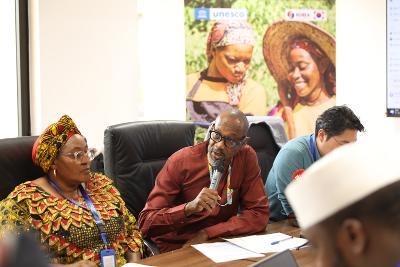

The United Nations Educational, Scientific and Cultural Organisation (UNESCO) has urged stakeholders in Nigeria’s education sector to move beyond discussions and translate policies into actionable results.
The UNESCO particularly called for prioritising youth skills development to address unemployment in the agro-processing sector.
The Head of Office and Representative of the UNESCO Office in Abuja, Jean-Paul Abiaga, made the call in Abuja at the closing of a labour market workshop focused on skills gap analysis in the agro-processing sector under the BEAR III project in Nigeria.
Dr Abiaga, who was represented by the National Programme Officer on Culture at UNESCO, Dr Ifeanyi Ajaegbo, stressed that for sustainable results to be achieved, there must be a collaborative spirit.
“We are united by a shared goal of strengthening Nigeria’s agro-processing skills ecosystem, and that is why we are here today. Your presence reflects the collaborative spirit that is essential to achieving this meaningful and sustainable outcome, especially through skills that are the bridge between potential and opportunity. It is only relevant, market-oriented skills that will enable people to thrive in today’s fast-changing world, a world ruled by AI, technology, digital interventions,” he said.
READ ALSO: UNESCO Urges Skills Training to Improve Agro Sector
According to the UNESCO Head of Office, there are a lot of gaps in the labour market; hence, identifying these gaps and finding lasting solutions is crucial.
“By identifying where these gaps exist, we can prepare in more effective ways, design responsive training programmes and strengthen the link between education and employment. This is critical for Nigeria, where there is a huge gap between what we are taught in classrooms and what is needed in the field out there, particularly in the labour market,” he added.

Also speaking, the Executive Secretary of the National Board for Technical Education (NBTE), Mr Idris Muhammed Bugaje, who was represented by Bashir Datty, highlighted the critical role of work-based learning in bridging skill gaps and its commitment to strengthening the national skills qualification network.
For his part, the representative of the Korean Research Institute, Dr Cho Sunglk, emphasised the need for work-based learning in strengthening the link between training and employment, particularly across various sectors in agriculture.

According to the Director of Technology and Science Education at the Federal Ministry of Education, Mrs Patricia Ogungbemi, represented by Mrs Christiana Obaje, a Deputy Director in the ministry, there is a need for adequate investment in technical skills teaching and learning to achieve set targets.
“Our mission is to move beyond theoretical science and transition into applied industrial competence. We cannot train in a vacuum. We must ensure skills cultivated in TVET institutions are the exact skills required by the factory floors and processing plants of today and tomorrow. Our collective focus should be more on creating a sector that is not just a pillar of Nigeria’s economy, but the very backbone of its food security and industrial growth, particularly agro-processing,” she stressed.
The consultation workshop centred on shaping policy, legislation, and implementation in agro-processing, ensuring TVET programmes are responsive, future-ready, and aligned with industry needs.
Participants are optimistic that the workshop will build a robust, practical, and world-class work-based learning framework that will make the agro-processing sector the envy of the continent.
Leave a Reply