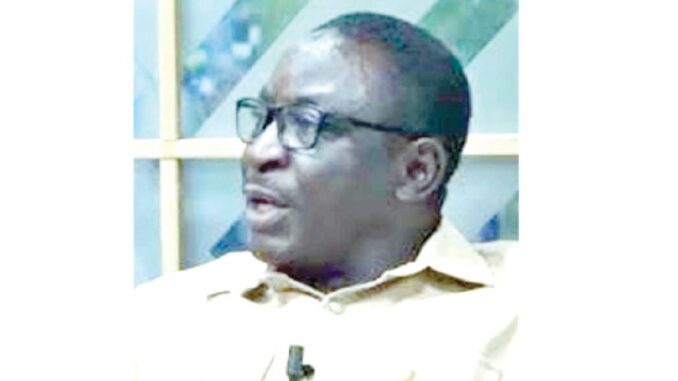
In this interview with CHRISTIAN APPOLOS, the Secretary General of the Trade Union Congress (TUC), Comrade Nuhu Toro, speaks on the challenges confronting the labour movement. Excerpts:
WITH the rapidly changing landscape of trade unionism, driven by political pressures and government interference, how prepared are trade unions to respond effectively to emerging challenges?
We are fully aware of the emerging challenges before us. Though we may not have all the answers at once, I know that the Trade Union Congress of Nigeria and the Nigeria Labour Congress have all it takes to deal with the challenges as it unfolds.
Considering our years of experience in the trenches, we have confronted several situations as they emerged. The current and emerging challenges, from wherever they are coming from under whatever circumstances, are not entirely different. With the determination we have, the problems staring us in the face are surmountable.
Recent tensions involving major corporate actors, including the Dangote-related issues, have put unions under pressure. What strategies is the TUC putting in place to confront these challenges and protect workers?
You know, there has been this recurring argument that unions are no longer relevant, that they are not doing enough. Well, as human beings, people are entitled to their opinions. But when the chips are down, you will see whether unions are relevant or not.
Now, back to your question. For me, what is critical is our moral responsibility to defend working people and the downtrodden in Nigeria. That is the fundamental question we as trade unions have anchored our actions and activities on, and the same will continue to guide and lead us. Because like you may have heard, workers have never gotten anything on a platter: it has always been through struggle and consistent engagement.
ALSO READ: INEC plotting to prevent us from fielding candidates – ADC
In fact, I can boldly say that trade unions are the most active pro-workers and people welfare, good governance and development activists. So if we fail, those who say or think we are no longer relevant will wake up one day and find that the capitalists have taken away every right they have or enjoy. A critical example is how they openly push for policies that favours them and their empires while unleashing untold economic hardship on the citizens.
So like I said, I am confident that we have all the technical competencies to confront the issues. We are doing our best to find a soothing approach and strength to tackle the challenges as they unfold on a daily basis.
The Dangote issue you mentioned, for me, is just one small atomic element of the broader problems confronting us. While the boisterousness of that challenge seems to have died down, we are still working hard to ensure that workers and unions are not trampled upon by any individual or group of persons under any guise.
With fuel prices and inflation driving a steep rise in the cost of living, how are these pressures affecting Nigerian workers?
Just to mention one aspect. It is no longer news that the cost of fuel in Nigeria today is hovering between ₦1,000 and ₦1,250 per litre. That means if you want to fill a 60-litre tank, you are spending nothing less than ₦100,000. That is madness.
And don’t forget, once anything happens to petroleum products, it automatically turns into a huge burden on all of us because they affect the entire economy. For instance, there is virtually nothing you do in Nigeria today that is not tied to fuel.
If you are a barber, because GENCOs have failed to provide reliable electricity, you need fuel to power your generator. If you are a trader, you need fuel to run your shop so customers can see light and patronize you.
If you are a farmer, you need fuel for transportation to move your produce. The chain goes on and on; everything in the Nigerian economic space is linked to petroleum products.
This brings us to the high cost of living. The situation gets excruciating by the day. Workers and Nigerians generally are being hit on every side. Inflation here which has eroded the ₦70,000 minimum wage, hike in electricity tariff by the government and its cronies, insecurity on one side raining hell on farming and the produce, and so on.
We are also constrained because we entered into an agreement with the government that the wage will last for three years. That means we must wait until the time is right for a review.
So, the only option is to engage the government and look for cushioning mechanisms even though the government often rolls out policies without utilizing social dialogue mechanisms. It may not eliminate the hardship completely, but it can reduce it to some extent.
That, for us, that’s what is critical at this moment; to provide some relief for citizens and working people who are going through a situation that is not of their own making, but a product of government policies.
You mentioned concerns about limited consultation. Given that many policies are already implemented before labour is engaged, how can constructive dialogue still be achieved?
A win-win situation requires good faith. But once a government has already drawn conclusions and closed the process before engagement, that reflects bad faith. Another great challenge is insincerity. The government has always been insincere in its dealings with workers and the citizens. That is the most disheartening thing about the kind of government we have in Nigeria.
However, like you rightly said, that does not mean we cannot engage. We have been engaging and will continue to engage the government and as usual: using superior arguments, backed by empirical evidence and data, to convince them that some of these policies may be detrimental to the nation.
Another concern of ours is the monumental corruption that often accompany government policies. Take subsidy removal for instance. In theory, it is not a bad policy if implemented as designed. But in practice, you see something entirely different; where a few individuals go home with billions at the expense of the majority. That is the concern.So, there must be conscious mechanisms for monitoring and evaluation. Otherwise, we will continue going back and forth, and at the end of the day, it is the working people and the masses who will suffer.
What are the implications of excluding labour from policy formulation, especially when such policies often result in widespread economic hardship?
It is irresponsible for any government to behave the way we have seen over the years and even now. Trade unions are critical stakeholders. You cannot shave a man’s head in his absence.Government policies are meant for Nigerians, so Nigerians must be carried along in both formulation and implementation. Otherwise, such policies will backfire.
In light of these challenges, what actions should Nigerians expect from the TUC in the coming days?
Well, decisions in the Congress do not reside with me or one person alone. The relevant organs of the Congress will meet, deliberate, and take a decisive decision. Hopefully in the coming days, the Congress will speak.
WATCH TOP VIDEOS FROM NIGERIAN TRIBUNE TV
Leave a Reply