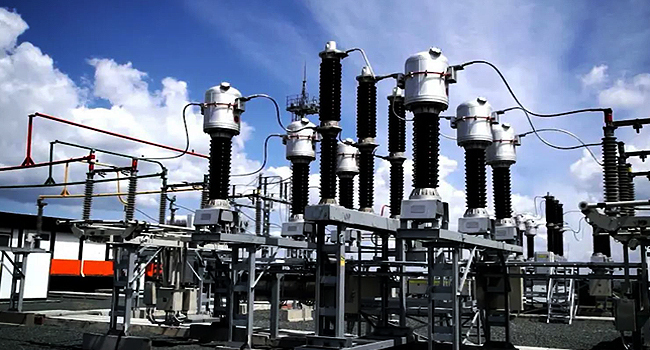
The Transmission Company of Nigeria (TCN) said it plans to expand the National Grid, as it commences implementation of Resettlement Action Plan (RAP), including acquisition and clearing of Right of Way (RoW) for the reconstruction and upgrade of 138km Alaoji–Onitsha 330kV transmission line.
The project is being carried out in partnership with the African Development Bank (AfDB), according to a Monday statement by the Company.
The project will upgrade the existing single-circuit line to a 330kV double-circuit quad-conductor transmission line, significantly enhancing the grid’s capacity and efficiency.
Compensation for Project Affected Persons (PAPs) was carried out between March 31 and April 2, 2026, for Project Affected Persons (PAPs) within Abia and Imo states sections of the Transmission Line corridor, covering, eight Local Government Areas (LGAs).
The Assistant General Manager (Health, Safety, and Environment) for the AfDB Project Implementation Unit, Aromeh Adole, confirmed that following the payment of compensation, PAPs have been given a 90-day grace period to leave the RoW.
Highlighting the significance of the project, Adole said: “The existing line is a single circuit, while the new line will deliver four times that capacity, fundamentally transforming bulk power delivery in the South East.”
He added that the project is expected to be completed within 18 months.
Acting Project Manager for the Nigeria Transmission Expansion Project (NTEP-1) under TCN-AfDB Project Implementation Unit (PIU), Engr. Edeh Obiora Alexander, representing the General Manager Program Coordination, Engr Aminu Tahir, while thanking the MD/ CEO of TCN, Engr. (Dr.) Sule Abdulaziz, for his good leadership qualities, which brought about the giant strides, commended President Bola Ahmed Tinubu for the timely release of funds.
He noted that the Federal Government provided the counterpart funding to ensure that all PAPs were compensated fairly and promptly.
He further explained that the upgrade will significantly increase the volume of electricity transmitted, improving power supply to the Alaoji and Port Harcourt axes, Abia State, and the entire South East region.
The transition to double-circuit quad-conductors will also reduce transmission losses and enhance overall grid reliability, it said, adding that the project remains a critical component of its broader strategy to expand the national grid and deliver more stable electricity to industrial and residential hubs across Nigeria.
READ ALSO: Tinubu Approves ₦3.3trn Payment Plan To Restore Reliable Power
The development followed approval of a ₦3.3 trillion payment plan aimed at settling long-standing debts in Nigeria’s power sector by President Bola Tinubu.
The development was disclosed in a statement issued on Sunday by the Special Adviser to the President on Information and Strategy, Bayo Onanuga.
According to the statement, the approval followed a final review of legacy debts accumulated under the Presidential Power Sector Financial Reforms Programme over 10 years, spanning February 2015 to March 2025.
“Following verification, ₦3.3 trillion has been agreed as a full and final settlement, ensuring a fair and transparent resolution,” the statement partly read.
The government noted that implementation of the repayment plan has already commenced, with 15 power generation companies signing settlement agreements valued at ₦2.3 trillion.
It added that the Federal Government had so far raised ₦501 billion to fund the initiative, out of which ₦223 billion had already been disbursed, while further payments are ongoing.
The grid suffered its second collapse in five days in late January 2026, with power dropping to near zero megawatts (MW).
Significant failures occurred on January 23rd and January 27th, 2026, causing nationwide outages.
The collapses are typically triggered by a combination of factors, including: aging transmission lines and substations, described as over 50 years old, generation constraints, and system disturbances.
Leave a Reply