• Oil edges up as US, Iran receive ceasefire framework
•Tehran rejects proposal as Trump’s deadline approaches
Emmanuel Addeh in Abuja
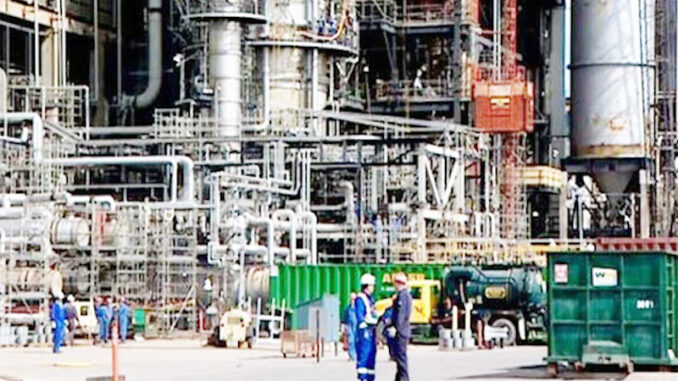
The Dangote refinery, Africa’s largest, has increased export of petrol and urea to African countries hit by supply disruptions caused by the Iran war, its owner, Aliko Dangote said yesterday.
Dangote said the refinery, operating at its maximum capacity of 650,000 barrels a day, had helped cushion the effect of the crisis both in Nigeria and across the continent, a Reuters report said.
“What I can do is assure Nigerians … and most of West Africa, Central Africa, and East Africa, we have the capacity to supply them,” Dangote said during a tour of the refinery on the edge of commercial capital Lagos.
He said the facility had shipped some 17 cargoes of petrol to other African nations and exports of urea fertiliser had also recently risen, as buyers sought alternative sources of supply.
“In the last couple of days, we’ve been looking to mostly African countries, which we were not doing before,” he said, referring to the fertiliser shipments, without giving figures, Reuters added.
The refinery has capacity to produce up to three million metric tons of urea annually, most of which is typically exported to the United States and South America, officials say.
Fuel prices in oil-producing Nigeria have reached record-high levels, industry figures show, as maximum output from Dangote refinery has not offset the effect of high crude prices.
Dangote said the refinery hoped to get more crude cargoes priced in local currency to help curb fuel costs.
Two trade sources and a refinery official told Reuters last week that state oil firm Nigerian National Petroleum Company Limited (NNPC) was allocating seven May cargoes for Dangote refinery, up from five in previous months.
Meanwhile, oil prices inched up in choppy trade on Monday, as investors awaited clarity on the status of talks between the U.S. and Iran and remained wary about sustained supply losses due to shipping disruptions.
Brent crude futures were up 0.1 per cent to $109.13 a barrel, even as U.S. West Texas Intermediate (WTI) crude futures were trading up 0.69 per cent, or 77 cents, at $112.31 per barrel.
U.S. and Iran received the framework of a plan to end hostilities, but Iran rejected immediately reopening the Strait of Hormuz, after President Donald Trump threatened to rain “hell” on Tehran if it did not make a deal by the end of Tuesday.
Iran also said it had formulated its positions and demands in response to recent ceasefire proposals conveyed via intermediaries. The Strait of Hormuz, which carries oil and petroleum products from Iraq, Saudi Arabia, Qatar, Kuwait and the United Arab Emirates, remains largely closed due to Iranian attacks on shipping after the war began on February 28.
Some vessels, however, including an Omani-operated tanker, a French-owned container ship, and a Japanese-owned gas carrier, have passed through the Strait of Hormuz since Thursday, shipping data showed, reflecting Iran’s policy to allow passage for vessels from countries it deems more friendly, Reuters reported.
The Middle East supply disruptions have led to refiners seeking alternative sources for crude, particularly for physical cargoes in the U.S. and Britain’s North Sea. Spot premiums for U.S. West Texas Intermediate crude has jumped to all-time highs on competition between Asian and European refiners.
On Sunday, OPEC+ agreed to a modest rise of 206,000 barrels per day for May. Saudi Arabia also set the official selling price of May Arab Light crude oil to Asia at a record premium of $19.50 a barrel, above the Oman/Dubai average, an increase of $17 from the previous month, Aramco said.
At the same time, Iran on Monday rejected a 45-day ceasefire proposal and said it wanted a permanent end to the war, even as Israel attacked a major gas field and Trump’s Tuesday ultimatum to open the Strait of Hormuz loomed.
“We only accept an end of the war with guarantees that we won’t be attacked again,” Mojtaba Ferdousi Pour, head of Iran’s diplomatic mission in Cairo, told The Associated Press. He said Iran no longer trusted the Trump administration after the U.S. bombed the Islamic Republic twice during previous rounds of talks.
Iran’s state-run IRNA news agency said Tehran conveyed its response through Pakistan, a key mediator.
Yet, a regional official involved in the talks said efforts had not collapsed. “We are still talking to both sides,” he said, speaking on condition of anonymity to discuss closed-door diplomacy.
Trump later stepped up his threats against Iran, telling a press conference: “The entire country can be taken out in one night, and that night might be tomorrow night.”
Iranian and Omani officials were working on a mechanism for administrating the strait, through which a fifth of the world’s oil is shipped in peacetime. Iran’s grip on it has shaken the world economy. Tehran has refused to let U.S. and Israeli vessels through after they started the war on February 28.
Word of Iran’s rejection came while Trump addressed an Easter event on the White House lawn, and it was not clear whether he was aware.
He threatened to go further on Iran. “If I had my choice, what would I like to do? Take the oil,” he said, suggesting it could be done easily, but “unfortunately the American people would like to see us come home.”
Asked if Tuesday, 8pm Washington time was his final deadline, Trump replied simply, “Yeah.”
Leave a Reply