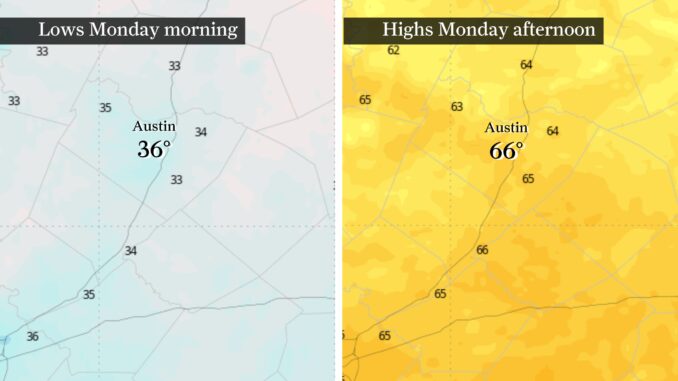
A sharp cold front this past weekend dropped Austin back into winter mode Monday morning.
The cooler weather may provide some relief for those sniffling and sneezing due to pollen. Unfortunately for allergy sufferers, that relief is temporary as a shift in wind direction will soon bring warmer weather and a renewed surge in airborne pollen. How long does cool weather last and when can we expect pollen counts to inch higher?
Austin temperatures dropped into the mid-30s early Monday morning, while towns north and west of the city — like Georgetown and Fredericksburg — fell to near and below freezing.
You’ll be able to shed the heavy coat or jacket by the afternoon as high temperatures reach into the mid-60s in most neighborhoods. While this is a few degrees shy of what late February normally brings, it’s far from unusual to see this kind of chill less than one week from the start of meteorological spring on March 1.
Temperatures will fall quickly again after sunset Monday, though not as low as they did to start the week. By Tuesday morning, most of us start the day in the upper 30s to lower 40s. After highs in the 60s Monday, temperatures rebound to around 75 degrees by Tuesday afternoon as gusty southerly winds return.
Peak wind gusts Tuesday afternoon could reach 30 mph at times, with 25 mph breezes lingering through Wednesday as high temperatures climb into the 80s.
Rising temperatures and gusty winds often cause concern for fire weather, but the southerly direction of the wind should keep relative humidity values high enough to mitigate most fire risks.
The cooler weather helps to curb some of the highest pollen counts through Tuesday.
For cedar elm pollen sufferers, this likely doesn’t include you. Northerly winds behind the front are carrying cedar elm pollen into the Austin area from Hill Country sources.
By Wednesday, warmer air combined with gusty southerly winds will shake loose fresh pollen and spread it efficiently across Central Texas, likely erasing any early-week relief.
A soaking rain would help bring the pollen levels down briefly, but that remains absent from this week’s forecast. If you contend with fierce spring allergies, but don’t want to be stuck inside for the next two months, consider getting outside between 6 and 9 a.m. when pollen counts tend to be lower, especially when winds are light.
Leave a Reply