Nigeria’s security leaders have pointed out that poor coordination of intelligence is a major problem hurting national security efforts, and they warned that without quick changes to the system, new threats will keep getting ahead of our ability to respond.
The concern was raised at the inauguration of Course 10/2026 and an inter-agency seminar at the Army War College Nigeria in Abuja, where senior military officers, law enforcement agencies and strategic stakeholders examined the role of intelligence sharing in national security management.
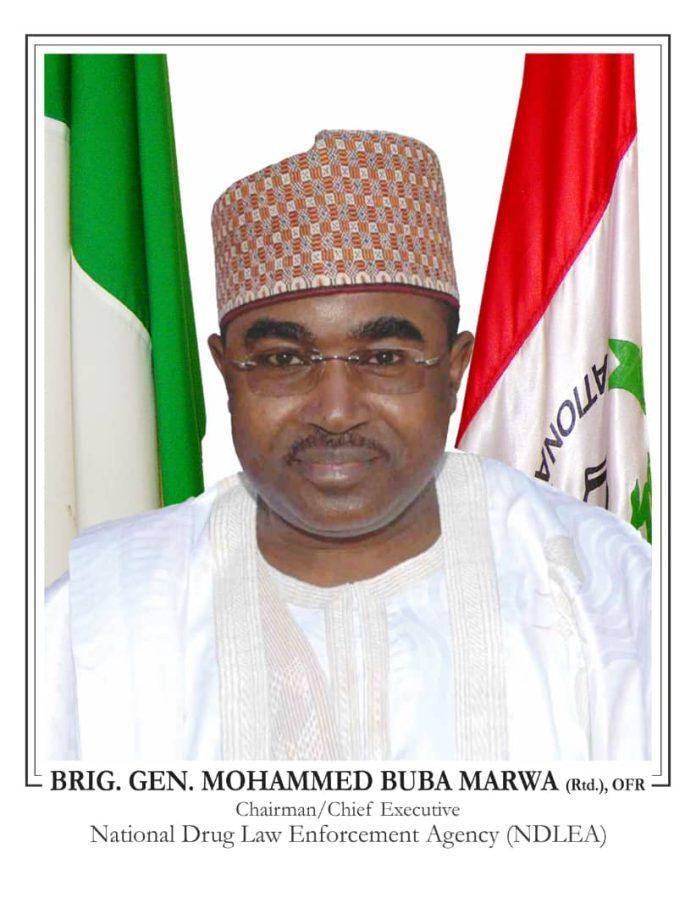
The Special Guest of Honour and Chairman of the National Drug Law Enforcement Agency, retired Brigadier General Buba Marwa, said Nigeria’s current threat landscape demands a shift from isolated institutional responses to a unified operational framework driven by shared intelligence.
“The notion of security as purely a military or law enforcement responsibility is insufficient. An integrated and cooperative approach is required to synergise all security stakeholders.”
He cautioned that as criminal and terrorist groups become more advanced, especially in using technology and international connections, we need intelligence systems that can work together and respond quickly.
“The undeniable nexus between illicit drug trafficking and the funding of broader security threats requires a concerted response.”
Marwa called for institutionalising intelligence-sharing mechanisms and joint training frameworks across agencies to improve operational effectiveness.
“Seamless and secure mechanisms for real-time intelligence sharing will enhance preemptive and proactive threat response.”
Earlier, the Commandant of the Army War College Nigeria, Major General Umar Mohammed Akali, positioned the seminar as part of a broader doctrinal shift toward integrated security operations.
“The complex nature of contemporary security threats demands synergy among all elements of national power.”
He noted that the course convened participants from the Armed Forces, law enforcement agencies and allied African countries, reflecting a deliberate move toward multiagency and multinational collaboration.
“This seminar serves as a platform to deepen cooperation, enhance collaboration and share best practices in security management.”
Providing doctrinal insight, former Chief of Defence Intelligence, retired Major General Samuel A. Adebayo, said intelligence failure remains central to recurring security setbacks.
“Lack of cohesive and actionable intelligence has made nations suffer security incidents.”
He stressed that intelligence must be treated as a national asset rather than an institutional preserve, warning that fragmentation weakens both operational coordination and policy response.
“When intelligence is shared, there is a common understanding of threats and improved situational awareness.”
Adebayo promoted the idea of “unity of effort” as a key strategy, allowing agencies to use their unique strengths while avoiding unnecessary overlap.
“No single agency possesses the capacity to address the full spectrum of national security challenges.”
The course structure reflects this integrated approach, bringing together about 100 military participants drawn from the Nigerian Army, Nigerian Navy, and Nigerian Air Force, along with officers from African partner nations, including Botswana, Chad, Congo, Ghana, Guinea, Liberia, and South Africa, reinforcing multinational dimensions of contemporary security cooperation.
In addition, 43 participants were drawn from Nigeria’s broader security and governance ecosystem, including the Nigeria Police Force, Department of State Services, Nigeria Customs Service, Nigeria Immigration Service, National Drug Law Enforcement Agency, Nigeria Security and Civil Defence Corps, Economic and Financial Crimes Commission, Federal Road Safety Corps, Office of the National Security Adviser, Defence Intelligence Agency, National Emergency Management Agency, Federal Ministry of Justice, Federal Fire Service, and National Orientation Agency, underscoring a deliberate whole-government framework for intelligence coordination.
The scale and diversity of participation signal a structural shift in Nigeria’s security thinking: that resolving intelligence fragmentation now requires not just policy alignment but operational integration across military, law enforcement, intelligence and civil institutions within a unified national security architecture.
Leave a Reply