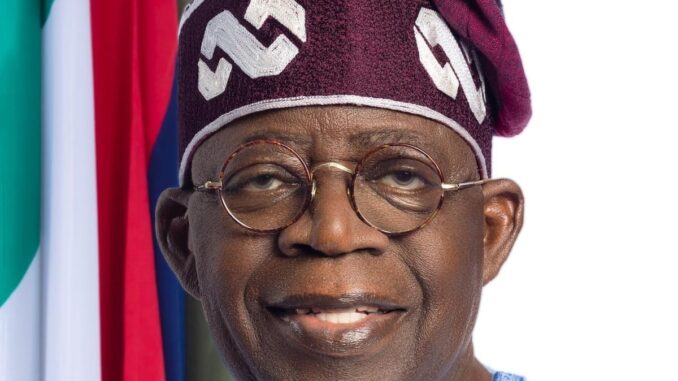
By Dave Agboola
In the annals of Nigerian political history, two names stand out as towering figures whose philosophies have shaped the nation’s trajectory: Chief Obafemi Awolowo, the sage of Ikenne, and Asiwaju Bola Ahmed Tinubu, the Jagaban of Borgu, Nigeria’s current president. Though separated by decades, their ideas converge in a remarkable way, with Tinubu’s intellectual framework of financialism echoing and reinterpreting Awolowo’s Awoism. Together, they represent two epochs of Nigerian political thought—one rooted in the mid-20th-century struggle for social justice, the other in the 21st-century battle against financial dominance and economic stagnation.
Awolowo’s Awoism was a philosophy of welfarism, anchored on free education, healthcare, and regional autonomy. It was a vision that sought to democratise opportunity, ensuring that the poorest Nigerian child could aspire to greatness through access to knowledge. Tinubu’s financialism, articulated in his co-authored paper ”Financialism: Water from an Empty Well”, is a critique of speculative finance and its corrosive effect on democracy and development. He argues that true wealth lies not in the manipulation of money but in productive enterprise, innovation, and human capital.
Tinubu’s journey to this intellectual and political prominence is itself a saga of resilience. Born in Lagos in 1952, he studied accounting in Chicago before returning to Nigeria in the 1980s. His first foray into politics came in 1992 when he was elected senator for Lagos West Senatorial District under the Social Democratic Party. The annulment of the June 12, 1993 election and the subsequent military dictatorship forced him into exile, but he returned in 1998 to join the pro-democracy struggle. By 1999, he had become governor of Lagos State, a position he held until 2007.
It was in Lagos that Tinubu’s enigma began to crystallise. Faced with dwindling federal allocations and a rapidly growing population, he embarked on bold reforms. He revolutionised Lagos’ tax system, increasing internally generated revenue from a paltry ₦600 million monthly in 1999 to over ₦7 billion by 2007. This financial independence allowed Lagos to invest in infrastructure, healthcare, and education, echoing Awolowo’s welfarist ideals but through the lens of modern fiscal pragmatism. Tinubu’s Lagos became a model of subnational governance, a city-state that could stand on its own feet.
READ ALSO: Open Letter to President Bola Ahmed Tinubu
Yet Tinubu was more than a governor; he was a strategist, a kingmaker. After leaving office, he built the Action Congress of Nigeria (ACN), which later merged with other parties to form the All Progressives Congress (APC). His political dexterity was evident in 2015 when the APC defeated the ruling Peoples Democratic Party (PDP), ending 16 years of dominance. Tinubu’s role in that victory cemented his reputation as the architect of modern Nigerian politics.
The road to the presidency, however, was fraught with hurdles. Allegations of corruption, questions about his health, and fierce opposition from within and outside his party tested his resilience. Yet Tinubu weathered the storms, relying on his grassroots network, political alliances, and sheer determination. In 2023, he achieved his lifelong ambition, becoming Nigeria’s 16th president.
As president, Tinubu has sought to translate his philosophy into national policy. His removal of fuel subsidies, though controversial, was aimed at freeing resources for investment in infrastructure and social programmes. His currency unification policy sought to stabilise Nigeria’s foreign exchange market, attract investment, and curb speculation. These measures reflect his financialist critique of speculative dominance, even as they impose short-term pain on ordinary Nigerians.
Awolowo’s free education policy in the Western Region transformed generations, creating a literate workforce that powered Nigeria’s development. Tinubu’s reforms in Lagos similarly expanded access to education and healthcare, though through innovative financing rather than direct subsidies. Both men understood that human capital is the bedrock of national progress.
Tinubu’s financialism also resonates with Awolowo’s emphasis on productive federalism. Awolowo believed that regions should control their resources and drive their development. Tinubu, in his critique of financial dominance, argues for an economy rooted in production rather than speculation. In both philosophies, the central theme is empowerment—of individuals, communities, and the nation.
From all indications, Tinubu’s presidency has already begun to etch its mark in Nigeria’s history. His bold economic reforms—removing fuel subsidies, unifying the currency, and pushing for foreign investment—were initially met with skepticism and fierce criticism. Yet, as the months rolled by, the results began to show: increased fiscal transparency, renewed investor confidence, and a gradual stabilisation of Nigeria’s financial system. Infrastructure projects have accelerated, with roads, railways, and power initiatives gaining traction across the country. His administration’s focus on digital innovation and youth empowerment has opened new opportunities for Nigeria’s burgeoning tech sector, positioning the nation as a rising hub in Africa’s digital economy.
What is most remarkable is how many of his critics have now turned into supporters. Those who once doubted his capacity to govern at the national level now acknowledge the depth of his vision and the courage of his decisions. Political rivals, civil society leaders, and even international observers have begun to rally behind his policies, recognising that his reforms, though tough, are laying the foundation for long-term prosperity. As the next general elections beckon, Tinubu’s achievements have become a rallying point, transforming skepticism into admiration and consolidating his stature as a leader who delivers on promises.
Nigeria today stands on the brink of monumental development across all sectors. The seeds of reform Tinubu has planted are beginning to germinate, and with continuous support, they can blossom into a new era of prosperity. His vision of a productive economy, rooted in human capital and innovation, is not just a political philosophy—it is a national imperative. For Nigeria to fully realise this promise, citizens, institutions, and leaders must continue to support his policies, ensuring that the resurgence of Awoism through Tinubu’s Financialism ushers in a future of enduring progress and shared prosperity.
•Agboola is the Chief Press Secretary to the Speaker, Lagos State House of Assembly
WATCH TOP VIDEOS FROM NIGERIAN TRIBUNE TV
Leave a Reply